A Guided Tour of Macintosh

When was the last time that you got a cassette tape with your new computer?

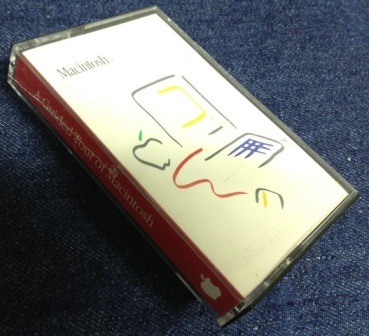
I found this tape – A Guided Tour of Macintosh — while cleaning out the basement today, and it came with our shiny new Macintosh in 1984. The Mac also came with printed manuals, quick start guides, and countless floppy disks.

mactape

That computer, which is still in the basement, didn’t have a hard drive, but we bought an external floppy drive, so we could have two disks available for copying and pasting.

It was way overpriced, compared to the other computers of the time, but we loved it, spent hours staring at that small built-in black and white monitor. Good times!

________________

Free Data Analysis Courses at Johns Hopkins

How are your data analysis skills? Excel is certainly making a push to be a “self-service BI tool” in the next version of Office, using PowerPivot and PowerView.

Besides Excel, there are other tools for analyzing data, and free university courses, through coursera.org, to help you get started. I’ve listed a few of the courses here, to give you an idea of what’s available. They require a sizeable chunk of time each week, during a set time period. The courses also have major projects or a final exam, so don’t sign up if you like to take things at your own pace.

Data Analysis

There is a Data Analysis course, led by Assistant Professor Jeff Leek, from the Simply Statistics blog. The course starts Jan. 22, 2013, and runs for 8 weeks. The workload estimate is 3-5 hours a week, with short video lectures and two major projects.


One of the prerequisites for the Data Analysis course is some familiarity with the R statistical programming language (http://www.r-project.org/). I’ve never used it, but R is a free download, and you have almost 6 months to learn a bit about it before the Data Analysis course starts.

Computing for Data Analysis

To get up and running with R, you could enroll in one of the other free courses – Computing for Data Analysis with Associate Professor Roger D. Peng. It’s a 4 week course, starting September 24, 2012, with about 3 hours of video per week, and 2 major projects.


Learn to Program: The Fundamentals

And if you’re completely new to programming, a University of Toronto course can help you learn the basics. Senior Lecturers Jennifer Campbell and Paul Gries, use Python as the language in their introductory course, Learn to Program: The Fundamentals.

Their course starts on September 24, 2012, and runs for 7 weeks. It’s estimated that the workload is 6-8 hours per week, with quizzes and a final exam.


___________

Using Google Reader on the iPad

This morning I checked my iPad, to see how much storage space is left. I have the 32 GB version, because I figured that by the time it’s filled up, a newer, shinier version would be available.

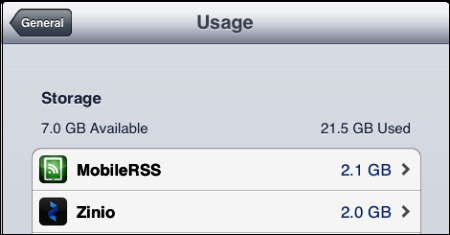
With iOS 5, you can go to Settings > General > Usage, to see the storage space available, and a list of the top 10 space-hogging apps. Uh-oh, there’s only 7 GB of storage left.

ipadusage01

The Major Space Hogs

I was surprised to see the MobileRSS app at the top of the list. That’s what I use to read the RSS feeds in Google Reader, while enjoying my morning coffee.

MobileRSS is one of the apps that I use every day, so I’m not going to uninstall it, just because it’s a space hog. Maybe it would use less space if I don’t “star” so many articles. I’ve also been unsubscribing from feeds that aren’t useful to me, so that might help too. Don’t worry though – your blog’s feed is still in my list. 😉

The Zinio app is the second worst space hog, but that’s not surprising, because I use it for a few magazine subscriptions. Maybe some old issues can be deleted, to make it a bit smaller, if the iPad space gets really tight.

Deleting Unused Apps

Looking at the rest of the items in the top storage list showed that there were many apps that could easily be deleted, because I never use them.

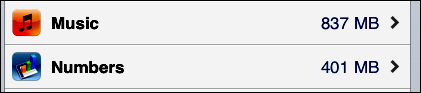
I left Numbers on the iPad, despite the fact that it’s one of the highest space users, at 401 MB, and I don’t use it very often. It cost $9.99, and I’m determined to get my money’s worth from it, eventually. I wonder how big Excel will be, when its iPad version is released, and how much it will cost. What’s your guess?

ipadusage02

The good news is that the iPad now has 14 GB of storage space available, so I can start downloading more stuff that I’ll never use!

___________

What Would You Do in 1952 Without Excel

Microsoft Excel is a big part of your life today, but it wasn’t around in 1952. If you didn’t have Excel to fill your days, what would you be doing?

In honour of Queen Elizabeth’s Diamond Jubilee celebrations, the BBC website has a glimpse of life in Britain in 1952. If you lived there, what would your life have looked like in 1952? What non-Excel career would you have pursued?

Your Life in 1952

To find out, click the link: Diamond Jubilee: You in ’52.  Then, click on Male or Female. Do not let the fancy hat sway your decision.

image

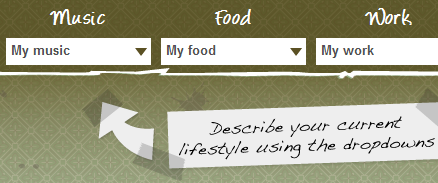
Then, select options from the drop down lists at the top of the page, to describe your lifestyle.

image

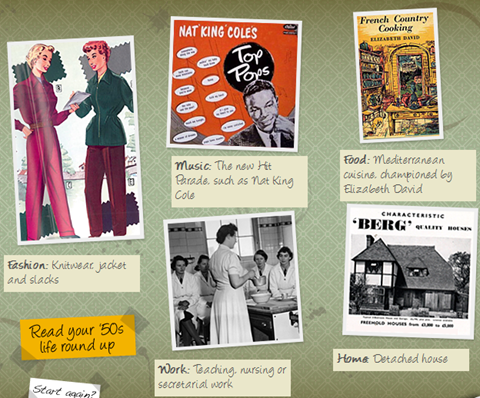
Here is what my life might have been like in Britain in 1952. Love those bright pink pants! I could wear them while teaching secretarial work and eating Mediterranean cuisine.

image

What would your 1952 life have been like? And thanks to Bryony, who posted this link in Twitter.

___________________

Bad Design and a Workaround

Imagine building an Excel workbook for a client, and explaining that they’ll have to stand on a chair and type with their toes, to enter the data. I’m sure that conversation wouldn’t end well.

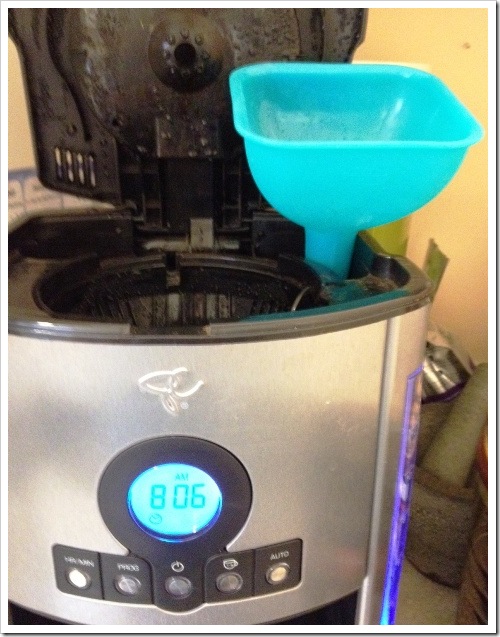
But that’s how I feel every morning, when pouring water into the PC Coffee maker that I bought at the local grocery chain – Real Canadian Superstore. The water tank opening is so small that I need to use a funnel to avoid a flood. It’s tough enough to function at 8:00 AM, and even harder when you haven’t had your coffee yet!

With my luck, this coffee maker will last another ten years, so I’d better keep that filter handy. If I’m going to do Excel programming, I need my coffee!

coffeemaker

_________

The Good Old Days With Multiplan

While rooting through my office supply closet today, I found several boxes of floppy disks. Some were unused, and other had programs or data on them. Do you have a supply of disks too? Ever use them?

None of my current computers even have a floppy drive, so it’s unlikely that I’ll ever use the disks again. But, I hang onto them, just in case a client calls, asking for a copy of work that I did for them in 1992.

Microsoft Multiplan

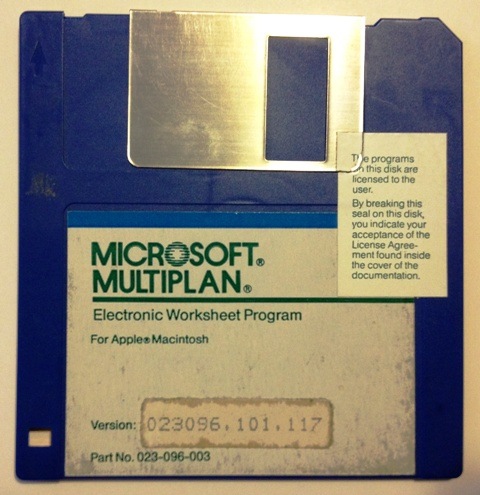
At the back of a box of program disks, I found this copy of Microsoft Multiplan.

multiplandisk

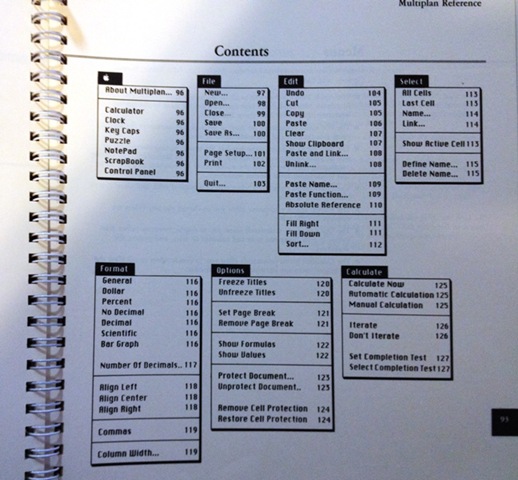
And if I ever have to reinstall the Multiplan program, the good news is that I have the manual too!

multiplanmanual

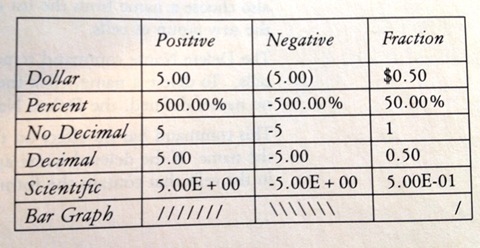
Multiplan didn’t have all the features that Excel has, but it’s too bad that they didn’t keep that Bar Graph number format.

multiplannumbers 

__________

Microsoft Arc Touch Mouse

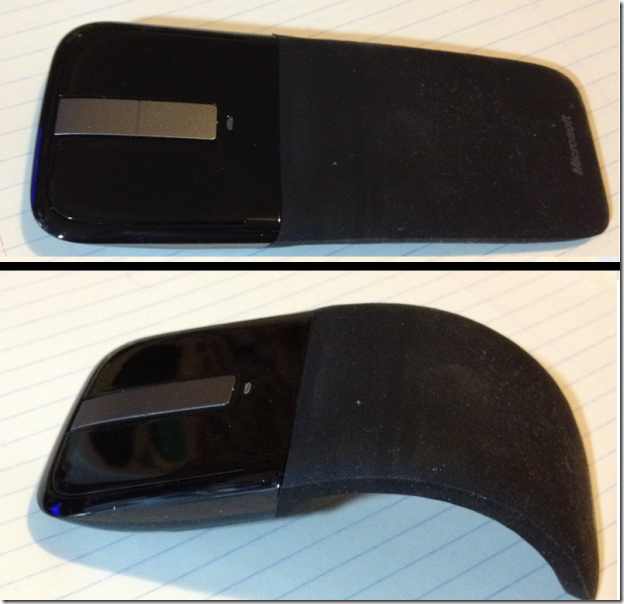
Recently, I received a cool looking gift from Microsoft – a Microsoft Arc Touch Mouse. The mouse lies flat for storage, and you bend it, to snap it into shape, when you want to use it.

mouseflatbent

It has a very small transmitter, that sticks out about 1/2″ when plugged into the computer’s USB port. When you’re not using the transmitter, just put it on the front or back of the mouse, and it magically (or magnetically) sticks there.

Instead of a scroll wheel, there is a slider, and that feature was very easy to use.

Testing the Arc Touch Mouse

The mouse was easy to install and use – I just plugged in the transmitter, and it was ready to go. On my first try, I didn’t bend the mouse far enough (one click, instead of two), so it didn’t work. After checking the Getting Started guide, I gave the mouse another click and it fired up.

The mouse handled well, for the most part, but it was a little sticky when trying to do some fine work. Maybe it gets better when the mouse has been used a little longer, or the operator has more experience.

Back to My Old Mouse

I worked with the Arc Touch mouse for a couple of hours, but couldn’t get used to it, so I’ve put it away for now. It would be better suited to someone with larger hands than mine, I think.

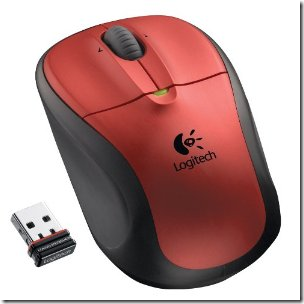
In my hand it felt too wide, and I was always conscious of the edges of the mouse. For now, I’ll stick with my little Logitech M305, which is a better size for me.

image

Have You Tried It?

Have you used the Arc Touch mouse? Did you like it and stick with it?

___________

Hidden Form in Access Closes Unexpectedly

Today I solved a nagging problem with an Access database, so I’ll share the solution here, in case it helps someone else.

In an Access database that I built, there is a Login form, where the users select their name from a drop down list.
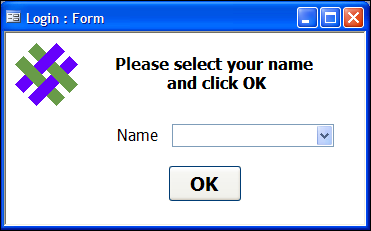
accesslogoform03

Then, when they click OK, the Login form is hidden, and a data entry form opens.
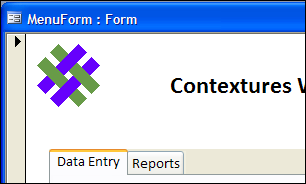
accesslogoform01

The Login form stays open in the background, and other forms and queries can hook into the ID for the selected user name.

Hidden Form Closes Automatically

Everything works well, except when I open the data entry form in design view, to make changes. Then, without warning, the Login form closes. The user ID isn’t available to any of the other forms, and I have to go back to the Login, and select a name again.

This is more of an annoyance than a serious problem, but I wanted to figure out why it was happening.

I put breakpoints all through the code, and stepped through, to find out when the Login form closed. Was there something in the code that was making it shut down?  Nothing turned up in the code, so I was left scratching my head.

The SubForm Did It

Finally, it dawned on me that the Login form and the Data Entry form both used the same subform – it holds the logo, at the top left.

accesslogoform04 

The Logo subform saves space in the database, because the image is only in there once. It also makes it easy to make global changes, if the logo or heading text changes.

When I opened the data entry form in Design View, the Logo subform was also in Design View.
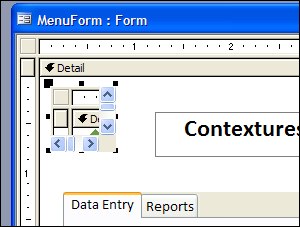
accesslogoform02

The hidden Login form closed because it couldn’t show the Logo in form view, while the Logo was in Design View on another form.

Fixing the Problem

To solve the problem, I created a copy of the Logo form, and named it Logo2. On the Login Form, I changed the subform to Logo2. Now, there is no conflict when I open the Data Entry form in Design View, so the hidden Login form stays open.

Maybe this will help you, if you have Access forms that mysteriously close, without being told to.

__________